
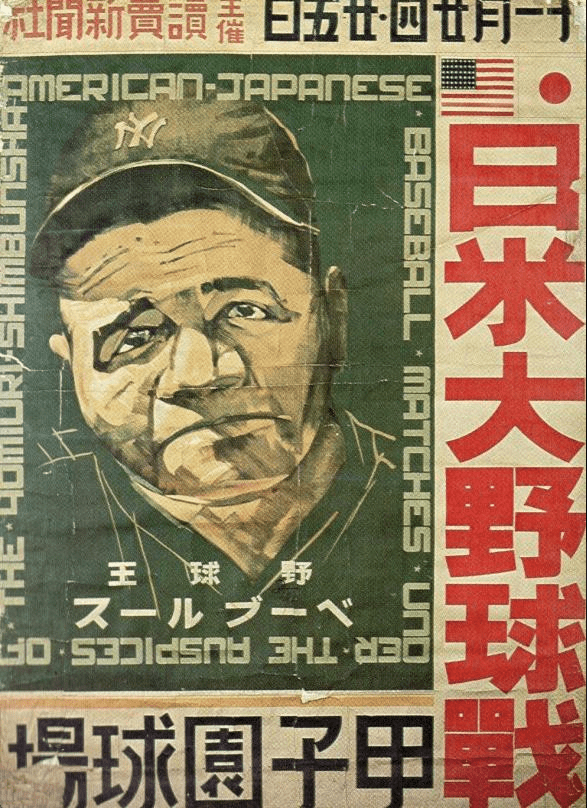
Baseball was first introduced to Japan in 1872, by professor Horace Wilson, who taught the game to students at Kaisei Academy in Arakawa, Tokyo. In 1934, an All Star Team of MLB legends, led by the likes of Lou Gehrig, Babe Ruth, and Jimmie Foxx went to Japan for an exhibition tour of Japan, where they played against an All-Nippon team. The tour was incredibly popular and 2 years later Japan’s first professional league would be formed. By 1950, the popularity of the league had grown to reorganize into the Central League & the Pacific League under the NPB (Nippon Professional Baseball). (Source)
The First Japanese Pitcher
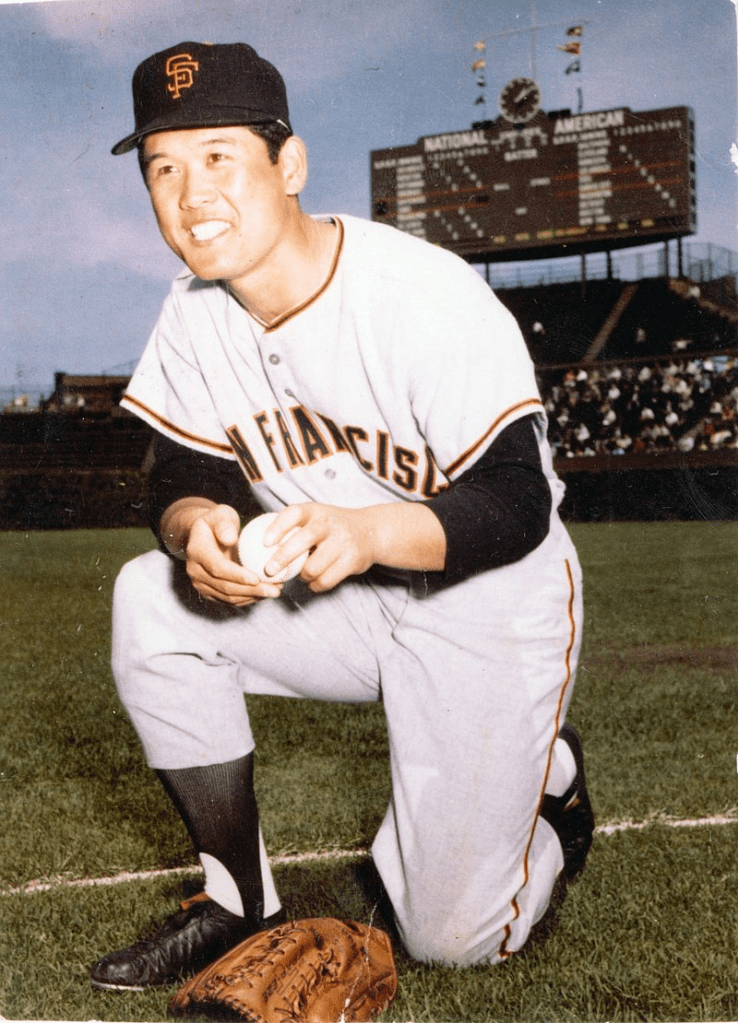
Although the NPB was formed in 1950, the first player would not make their debut in the MLB until 1964. Masanori Murakami, a left handed pitcher would debut for the San Francisco Giants at the age of 20 years old, after 1 season in the Pacific League. Murakami would only pitch 2 seasons in the MLB, to the success of a 3.43 ERA in 89.1 IP, racking up 100 strikeouts primarily as a reliever. Murakami would eventually return to the NPB to finish a 20 year career.
Since Murakami’s debut in 1964, there has been an influx of Japanese born pitching making the transition to the MLB, specifically in the past 28 years. There have been 19 pitchers with experience in both the MLB & NPB who were primarily used as starting pitchers.
The NPB to MLB Index
The NPB is regularly regarded as the highest level of professional competition outside of MLB, and that can be seen in the data. Overall these 19 pitchers combined for a 3.16 ERA in the NPB and a 4.09 ERA in the MLB (+29.4% increase), but had the same K/9 at 8.0, suggesting that the effectiveness of their pitches remained consistent. There were increases in both BB/9 and HR/9, suggesting that MLB hitters are more selective and are willing to take a walk, waiting for pitches they can hit for extra bases. BB/9 increased by 10.7% from 2.8 to 3.1, and HR/9 increased by 50% from 0.8 to 1.2. The increase to HR/9 is correlated with the ERA increase, with competition and style of play in the MLB focused on power.
The NPB data for this analysis starts in 1985 with Masato Yoshii‘s debut in the NPB, and the MLB data begins in 1995 with Hideo Nomo‘s debut with the Dodgers. Both pitchers had effective careers in the NPB, posting respective ERAs of 3.86 and 3.15 in a combined 524 games in the league.
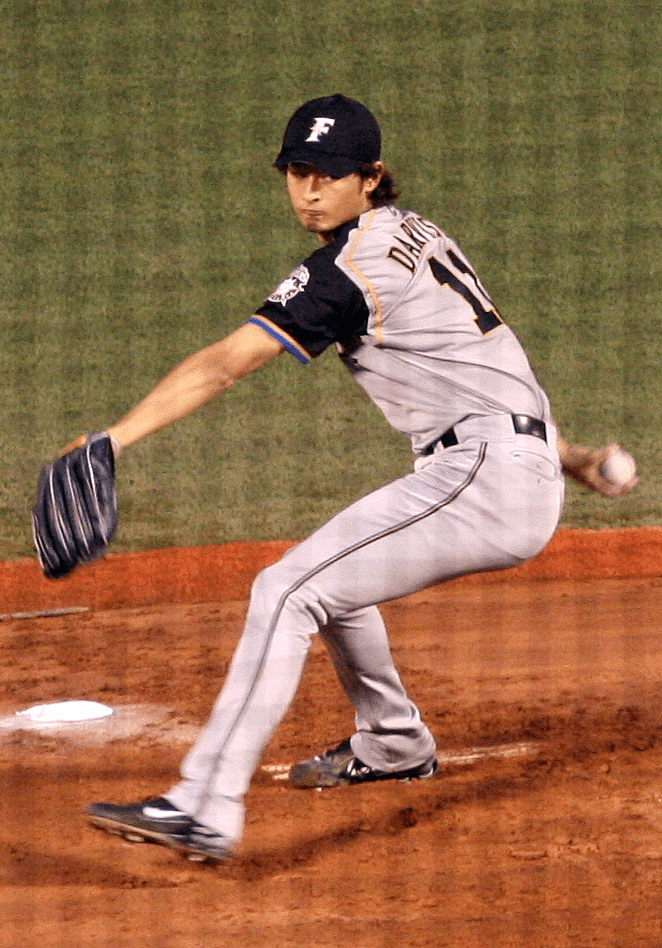
The pitchers with the most impressive careers in the NPB are more recent: Yu Darvish posted a 1.99 ERA in 167 games, Kenta Maeda had a 2.39 ERA in 218 games, and Shohei Ohtani pitched to a 2.52 ERA in 85 games, before making the transition to the MLB. These 3 pitchers have also found success in the MLB since their debut, with Darvish pitching to a 3.59 ERA in 266 games, Maeda to a 3.92 ERA in 190 games, and Ohtani with a 3.01 ERA in 86 games.
In total the three aforementioned pitchers saw a combined 59% increase in their ERA, 26% in BB/9, and 120% increase in HR/9, but notably also saw a 26% increase in their K/9. MLB hitters are striking out more often, but also hitting home runs against these pitchers more frequently.
It is also important to note that each of these three pitchers has had at least one Tommy John surgery. This could be attributed to the transition from NPB to MLB, where there is an emphasis on velocity in the MLB. This could also be attributed to workload in the NPB, where young pitchers in MiLB and MLB are often placed on innings limits and take their development very slowly.
Two pitchers who had little issue with the transition from the NPB to MLB were Hiroki Kuroda & Hisashi Iwakuma.
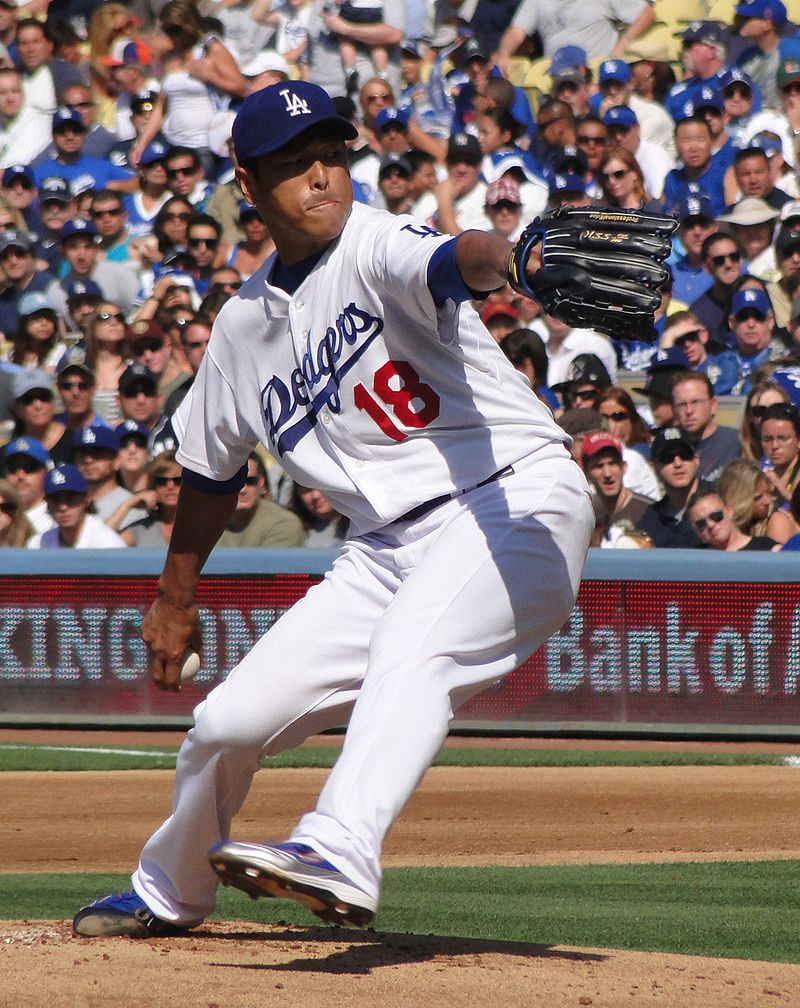
Kuroda pitched 11 seasons in the NPB before joining the Dodgers in 2008. Kuroda would spend 4 seasons with the Dodgers and 3 with the Yankees, before returning to the NPB in 2015, to finish out his 20 year career with 2 more seasons with the Hiroshima Carp. Kuroda pitched better in the MLB in the four main categories, improving his ERA from 3.55 to 3.45, his K/9 increased from 6.5 to 5.7, limited walks with BB/9 improving from 2.2 to 2.0, and held hitters to a 0.9 HR/9 in both leagues.
Similar to Kuroda, Iwakuma pitched 11 seasons in the NPB before joining the Mariners in 2012, where he would spend 6 seasons. Iwakuma did not see improvement in his stats, but rather minimal increases. His ERA increased by 5% from 3.25 to 3.42, K/9 increased from 6.9 to 7.3, and BB/9 decreased from 2.0 to 1.9. The area where Iwakuma struggled was HR/9 increased from 0.6 to 1.2, but surprisingly this did not have significant effect on his ERA.

The visual above outlines the ERA of each of the pitchers in the NPB and MLB. There is one trend that stands out; that being that the more successful a pitcher is in the NPB, the less likely they will maintain that high level of success in the MLB.
As previously mentioned Darvish, Maeda, & Ohtani were exceptional in the NPB. Adding Masahiro Tanaka, Yusei Kikuchi, & Daisuke Matsuzaka to that conversation, they each posted ERAs of 3.00 or better in the NPB, but saw a significant increase in ERA in MLB. Tanaka’s ERA increased from 2.66 to 3.74, Kikuchi’s increased from 2.77 to 4.71, and Matsuzka’s increased from 3.04 to 4.45. Each of these three pitchers were/are effective in the MLB, but did not keep that level of success they had in the NPB.
The visual looks at a pitcher’s career at as whole, there are instances where pitcher’s were extraordinary in the MLB, pitching to the levels of success they found in the NPB. In 2020, Yu Darvish posted a 2.01 ERA in 12 starts with the Cubs, in 2022, Shohei Ohtani posted a 2.33 ERA in 28 starts with the Angels, and in 1995, Hideo Nomo had a 2.54 ERA in 28 starts with the Dodgers. This highlights the level of variance in the career of a pitcher transitioning from the NPB to the MLB and that there may be major inconsistencies from season to season.
Narrowing the Gap
In the 2010s and 2020s the quality of pitchers coming to the MLB has improved significantly and the gap between ERA in the NPB and MLB has been narrowing. Below is a visual of the cumulative ERA of the pitchers in NPB and MLB trended by season. Unlike the previous visual this does not compare each pitcher before and after the transition, but rather the pitchers in the NPB compared against their counterparts in the MLB that same season. For example with Hiroki Kuroda making his debut in 2008, his production is accounted for in the MLB data, but Hisashi Iwakuma, would not debut until 2010, so his production is factored into the NPB ERA for 2008.
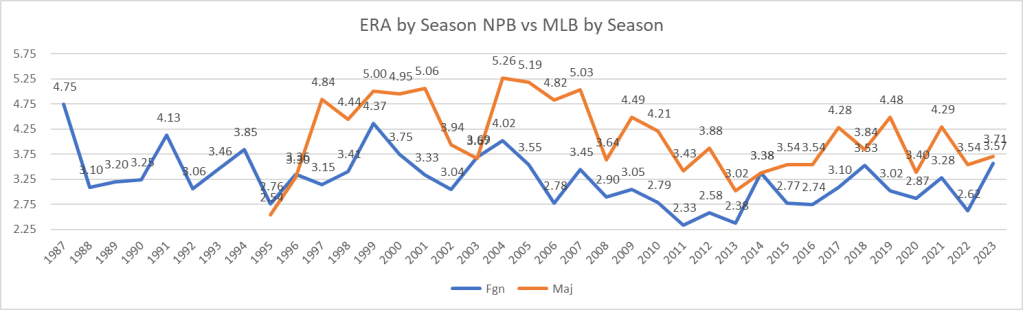
The visual suggests that the skill gap between the NPB and MLB is narrowing since 2013, indicating that performance in the NPB is a better indicator of performance in the MLB. This will be important as more and more talent from the NPB makes the transition to the MLB.
Most recently Kodai Senga made the transition and finished 2nd in ROY voting, with a 2.98 ERA and 10.9 K/9 in 166.1 IP. After 11 seasons in the NPB his ERA was 2.59, increasing by only 15%.
Who Is Up Next?

In the 2023 offseason, Yoshinobu Yamamoto signed a 12 year $325M contract with the Dodgers before even throwing a pitch in the MLB. Yamamoto is making the transition to the MLB with the best stats that any NPB has ever posted, with a 1.82 ERA, beating Darvish’s 1.99 ERA. Based on the full dataset we should expect his ERA to increase by 29.4% to 2.57, but considering the effectiveness he has in the NPB we can expect him to have a greater increase at 59% like Darvish, Maeda, & Ohtani saw, to 2.89.
Even if we anticipate the worst transition any pitcher has had, Kohei Arihara‘s 114% increase in ERA from 3.56 to 7.62, Yamamoto’s ERA would be 3.89, Still very respectable in the MLB. Additionally understanding that there will likely be variance season to season, Yamamoto should be effective in the MLB.
Another big name making the transition from the NPB to the MLB this season is Shota Imanaga after signing a 4 year $53M contract with the Cubs. Imanaga is not on same level as Yamamoto, posting a 3.18 ERA in 8 seasons in the NPB. Since he may not be considered part of that elite group, his ERA may not increase as dramatically, but applying the 29.4% value his ERA may end up somewhere around 4.11.
The pitchers wanting to make the transition from the NPB to MLB does not stop with Yamamoto and Imanaga, the Tampa Bay Rays signed Naoyuki Uwasawa to a minor league contract after 9 seasons in the NPB with a 3.19 ERA.
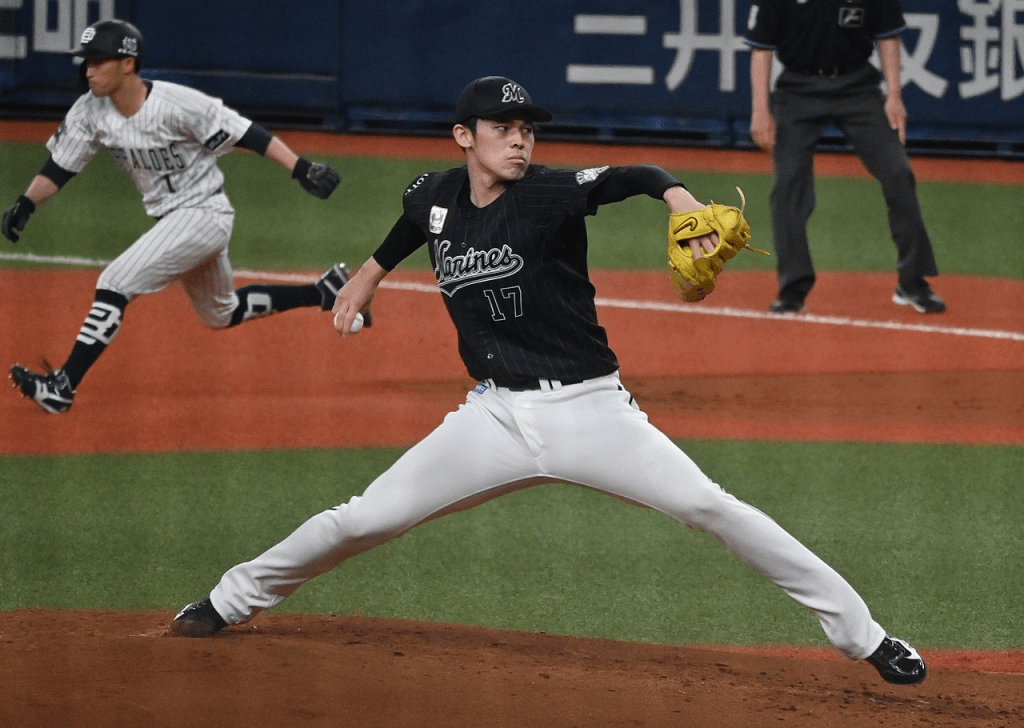
There are plenty of pitchers in the NPB with the talent to pitch in the MLB, most notably 21 year old Roki Sasaki, who asked to be posted this off season. Sasaki is a phenom in the NPB, at such a young age, Sasaki has 2.00 ERA in 302.2 IP in the NPB, showed success against MLB hitters in the World Baseball Classic, and even pitched 17 consecutive perfect innings in the 2023 NPB season. If he continues this level of success and avoids injury, Sasaki may be making headlines and garnering a huge contract just like Yamamoto sooner rather than later.

 Hayes Craze Baseball
 - Darvish_20070829.JPG, CC BY-SA 3.0, https://commons.wikimedia.org/w/index.php?curid=7432851)